Data centre developers and hyperscalers in the UK are all facing the same problem, and it isn’t rack density or cooling efficiency, it’s grid access. National Grid connection queues within the UK are stretching years in some regions, and with the race to bring capacity online fully underway, a multi-year wait for power is a critical barrier to growth.

It’s a subject Steve Bradley, New Business Director at JSM, will be speaking on at Solar & Storage Live UK on 24th September, alongside Alex Goodall, CEO & Founder, Xela Energy. The conversation will focus on a question more and more operators are asking every quarter: what happens when you stop waiting for the grid, and start generating your own power instead?

Here’s an outline of what that actually looks like in practice, why it’s gaining momentum now, and where the genuine challenges lie.

The Grid Connection Bottleneck Facing UK Data Centres

New connection applications across the UK are currently being offered connection dates into the mid 2030s. For an industry where a delayed connection results in delayed revenue, missed customer commitments, and lost sites altogether, that timeline is simply incompatible with market demand.

The result of this is a growing gap between where operators want to build and where the grid can actually support them. Sites with planning consent, fibre connectivity and customer demand already in place are being put at risk by a connection date that’s years away, which in turn is pushing private power from a theoretical possibility into a genuine reality.

What “Going Private” Actually Means

Private power, at its core, means generating and/or managing electricity on or near the site itself, rather than relying solely on a standard grid import.

For data centres, that most commonly means pairing on-site or co-located solar generation with battery energy storage (BESS), connected to the site via a private wire, rather than depending entirely on the public network.

Private Wire vs a Standard Grid Connection

A standard grid connection draws all of a site’s power through the public distribution network, which is where the queueing problem originates. A private wire, by contrast, is a direct connection between a generation source (such as a solar array) and the site consuming power, built and owned outside the public network. It can run alongside a grid connection, rather than replacing it entirely, to provide an additional source of power that doesn’t depend on brand new network capacity being available.

This is also where an agnostic approach matters. JSM works as an IDNO or private network partner precisely because it isn’t tied to a single connection model. Whether a site needs a private wire arrangement, an IDNO-adopted network, or a hybrid of the two, the right answer depends on the site, not on which option happens to be on offer.

Why Solar Gets Paired with Battery Storage (BESS)

Solar generation alone doesn’t match a data centre’s load profile. Data centres draw power continuously, 24 hours a day, while solar generation is by default limited to daylight hours and can vary with British weather. This is where battery storage steps in. By storing surplus energy when solar generation is at its peak, it can then supply energy over a full 24 hours to help smooth the shortfall between generation and consumption.

Together, solar and battery storage form a microgrid: a self-contained power system that can operate alongside the public grid and reduce a site’s exposure to constrained network capacity, which offers developers and hyperscalers a viable solution for energy constraints.

Why This Is Gaining Ground Now

Outside of the growing timelines for a new grid connection, there are additional pressures converging to make private power a live conversation:

● The cost of grid reinforcement has become highly visible. Industry figures put the cost of new capacity at around £700,000 per megawatt in some cases, a number that changes the economics of self-generation almost overnight.
● Solar and battery technology costs have continued to fall, making on-site generation a genuinely competitive option rather than a premium add-on.

This means self-generation is no longer prohibitively expensive, and waiting for a grid connection is no longer free either. Based on commercials alone, private power is fast becoming the more financially sound route forward.

The Practical Challenges

None of this is turnkey. Any operator considering private power or microgrid solutions should go in with a clear view of what’s involved. Before ground is broken, five things need to be considered:

● Planning consent for on-site or co-located generation, which varies significantly by site and local authority and needs to be scoped early, in the pre-construction phase, not after commitments are made.
● Early and ongoing engagement with the local Distribution Network Operator (DNO) or Independent Distribution Network Operator (IDNO), even where the intention is to reduce reliance on the public network rather than remove it entirely.
● Compliance with the relevant grid codes, including G99 (for generation connecting to distribution networks) and G100 (assessing the impact of larger connections), which govern how private generation interacts safely with the wider grid.
● Realistic modelling of generation versus load, so the solar and BESS system is sized to actual demand rather than a best-case assumption.
● Assessment of the cable route required to link the solar and BESS system to the data centre, through a cable route feasibility study.

These aren’t reasons to avoid private power. They’re reasons to bring in an experienced partner who has done this before: a partner who can navigate planning, network engagement and compliance as a single coordinated process, rather than three separate ones.

How JSM Approaches Private Power Projects

This is where an integrated, in-house delivery model makes a practical difference. Rather than coordinating separate specialists for design, electrical engineering, network connection and construction, JSM manages private power projects end-to-end, from feasibility and DNO/IDNO engagement through to design, installation and commissioning.

That matters because private wire and microgrid projects sit at the intersection of several disciplines: electrical engineering, planning, network regulation and construction delivery.

Splitting those across multiple contractors introduces exactly the kind of delay that operators are trying to design their way out of in the first place.

A single accountable delivery partner, with its own in-house electrical engineering capability and an agnostic approach to connection models, keeps the project moving as one coordinated programme, mitigating wastage and maintaining commercial focus for all parties.

Hear More at Solar & Storage Live UK

This subject will be explored in more depth by Steve Bradley and Alex Goodall during a session at Solar & Storage Live UK on 24th September. The talk will look at how UK data centre operators are approaching private power in practice, and what to weigh up before committing to a project.

Connecting Solar to Data Centres
12:50pm, Thursday 24th September, SSL Powering Data Centres stage

Talk to Us About Private Power

If grid connection delays are holding back a site that’s otherwise ready to build, it’s worth a conversation before the next connection offer date is pushed back further still. JSM’s in-house team can assess feasibility and manage the full delivery process, from design through to commissioning. Reach us at connect@jsmgroup.com.

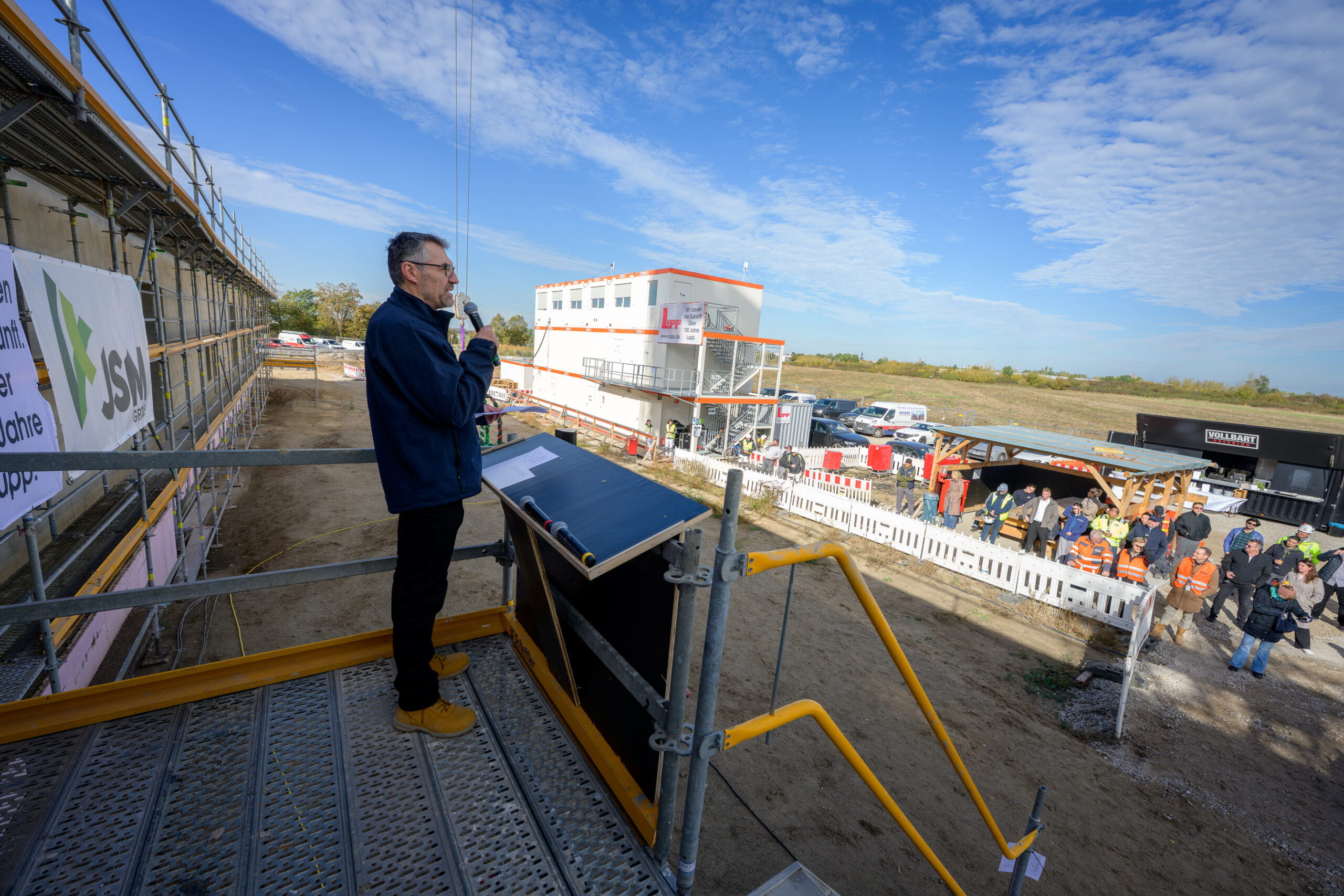
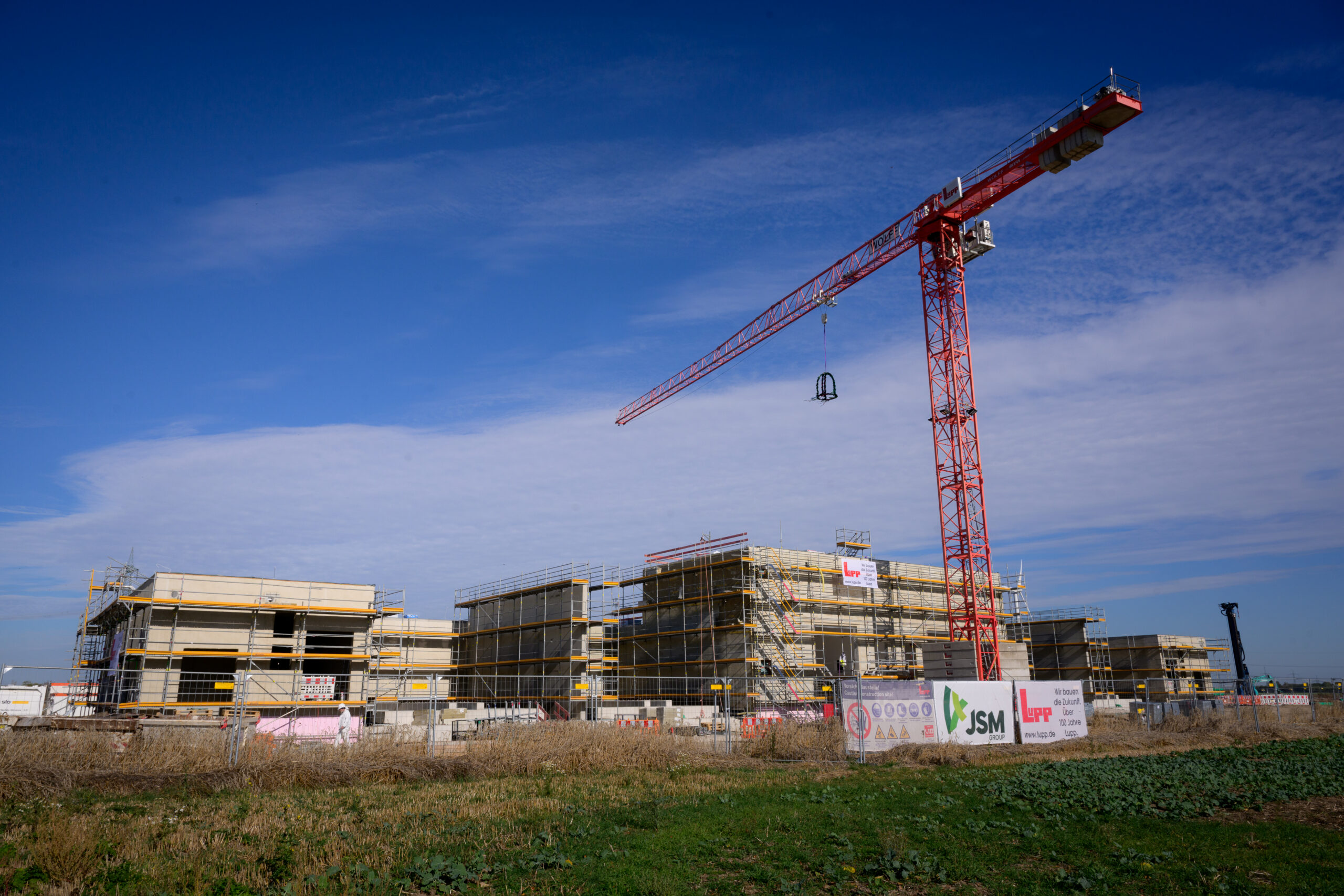
JSM Group, a leading provider of integrated utility infrastructure solutions, has commenced construction of the high voltage substation and cable route for maincubes’ new data centre campus in Nauen, Germany. The start of works follows the granting of the building permit for the energy infrastructure and represents a major milestone in the delivery of the mainHub Berlin campus. JSM Group is responsible for the delivery of the company owned 110 kV cable route and substation – critical components that will underpin the campus’s long term energy security and scalability. The approximately six kilometre cable route will transport electricity from renewable energy sources via the modern E.DIS distribution network to the site’s 110 kV substation.

Enabling high performance infrastructure for cloud and AI

The new campus has been designed with a grid connection capacity of 200 megawatts (MW), with further expansion options, to support high performance computing environments, including advanced AI workloads and complex data analytics. Through the delivery of this critical energy infrastructure, JSM Group is enabling a resilient, future proof power supply aligned with the demands of next generation digital services. maincubes selected Nauen as the site for its new campus due to the Berlin Brandenburg region’s stable energy supply, strong renewable generation from wind and photovoltaics, and favourable conditions for sustainable growth. The project further strengthens the region’s position as a hub for modern digital infrastructure. Oliver Menzel, CEO of maincubes, said:
The start of construction of the substation is the next visible step on our journey toward mainHub Berlin. In Nauen, a state of the art data centre location is being created – regionally rooted and internationally connected. In doing so, we are consistently continuing the success story of maincubes and reinforcing our commitment to sustainable, energy efficient and resilient digital infrastructure.
Michael Booth, CEO of JSM Group, commented:
This project highlights JSM Group’s capability to deliver complex, high voltage energy infrastructure for mission critical environments. Data centres of this scale demand absolute reliability, technical excellence and close collaboration with our partners. We are proud to be playing a central role in enabling maincubes’ expansion in the Berlin region and supporting the delivery of sustainable, high performance digital infrastructure.
Dr. Michael Wiebersinsky, Mayor of the City of Nauen, added:

With the new data centre campus, our region is developing into a highly modern location where future innovations can emerge. From a sustainability perspective, it gives me confidence that Nauen will be a reliable partner for the operating company maincubes.

Hanjo During, Managing Director of E.DIS Netz, said:
With the campus currently under development, we will connect a particularly high performance data centre to our regional electricity distribution network. With the campus planned here in Nauen, the connected capacity will increase significantly in the future.
With the Nauen development, maincubes continues to expand its presence in the capital region, building on the successful operation of its first Berlin data centre, BER01.

JSM Group has been appointed to design and build a new grid connection between Hillfield Lane in Elstree and Blossom Way in Hemel Hempstead.

The work spans over 16.3km in both the carriageway and footpath. Upon completion, the work will facilitate the connection of a new Data Centre in Hemel Hempstead via a new 132/33kV substation. Elstree 400kV substation is the nearest substation that has suitable load capacity to supply the demand for the works.

This will be carried out in two phases, phase one which will be the cable duct installation and phase two which will consist of the excavation of joint bays, cable installation and jointing then reinstatement and site cleared.

This involves the excavation and installation of ducts in various roads with planning liaison between JSM Group and Herts County Council. Due to the nature of the works and the impact on the local infrastructure the route has be planned to minimise the disruption to traffic in the surrounding areas wherever possible, this has included avoiding main roads, working longer hours, working outside schools during the summer break and carrying our 24-hour working at the weekends in specific busy locations to reduce the impact and delay on traffic due to the working week traffic flow.

JSM has installed advance warning signs and carried out letter drops of the streets prior to the works commencing. These letters include contact details for the project manager and site manager specific to each road so residents can personally contact the said individuals with any concerns or requirements that they may have. JSM are contactable 24 hours a day to deal with any on site issues.

The traffic management is carried out by a designated approved company who installs and maintains the traffic management with 24-hour contact numbers displayed on all site’s ready to deal with any out of hours emergencies.

Our in-house experts are working hard with key stakeholders including Hertfordshire County Council to ensure minimum disruption to the Public. As the works progress, we will continue to hold frequent reviews with Hertfordshire County Highways and provide weekly updates to assess suitable changes as the project develops. A project specific web site is available to track weekly progress and planned work.

JSM Group has been appointed to design and build a new grid connection between Mop End Lane and Haw Lane in Buckinghamshire.

The work spans over 16.4km in both the carriageway and footpath. Upon completion, the work will facilitate the connection of a new Data Centre via a new 132/11kV 120MVA substation.

This will be carried out in two phases, phase one will be the cable duct installation. Phase two will consist of pulling cable and jointing the lengths to make a continuous cable which requires three joint bays to be open at any one time for connections to be made.

Our in-house experts are working hard with key stakeholders including Buckinghamshire Council to ensure minimum disruption to the Public. This includes planning and using the least disruptive route to emergency services and local amenities, 24-hour weekend working and providing advance warning of the works. Additionally, we’ve provided all local residents with a single point of contact should they have any safety concerns while the works are ongoing.

As the works progress, we will continue to hold frequent reviews with Buckinghamshire Council Highways and provide weekly updates to assess suitable changes as the project develops.

Data centres are now classified as critical national infrastructure – are we doing enough to get them connected? We’ll be joined by other industry experts to discuss this at our roundtable on 23 April 2025. The modern world’s energy demands are evolving rapidly, driven by the rise of data centres, battery plants, and renewable energy projects. These developments are placing unprecedented pressure on network capacity and grid infrastructure. At the same time, speculative practices, such as “Zombie Projects” where planning approvals for solar farms or grid connections are obtained with no intention of timely implementation, are exacerbating these challenges. Such projects often lead to grid congestion and delay the progress of critical infrastructure. In conjunction with Building Magazine, JSM is hosting a roundtable discussion on 23 April 2025 with other industry experts to explore who are the winners and losers, and will the UK end up with what it needs to meet the climate challenge and demand for digital services (data storage and AI) as well as housing and commercial growth?

We will be looking at:

Understanding network capacity challenges

Highlight the increasing demand for grid connections due to rapid growth in data centres and battery plants, which are pivotal for a digitised and renewable energy future.

Discuss the implications of “Zombie Projects,” where planning approvals for solar farms or grid connections are sought as speculative investments rather than active developments.

Example: Applications for approvals without a clear timeline for implementation.

Impact on grid congestion and delays for critical infrastructure projects.

Identifying and prioritising critical infrastructure

Examine the importance of prioritising projects based on clear milestones and timelines.

Example: Linking grid connection priority to demonstrated project progress (e.g., secured funding, and planning consents).

Explore frameworks for assessing the criticality of infrastructure projects to energy security and societal needs.

Example: Data centres as essential for the digital economy; battery plants for energy storage and grid stabilisation.

Policy and regulatory strategies

Discuss the role of policy in mitigating “Zombie Projects.”

Consider regulatory changes to streamline grid connection processes for projects with proven milestones.

Technological and collaborative solutions

Highlight innovative solutions to optimise grid capacity:

Grid management technologies and dynamic load balancing.

Collaborative approaches between utilities, developers, and governments to improve transparency in grid allocation.