The utility infrastructure industry operates in an environment defined by complexity, long term risk and direct impact on people, communities and the environment. In that context, recognised standards matter. Frameworks such as the United Nations Sustainable Development Goals (UN SDGs) are not abstract ideals; they provide a shared reference point for what responsible, resilient delivery should look like in practice.

At JSM, the relevance of the UN SDGs lies in their ability to bring structure and consistency to sustainability thinking. Although, to the un-initiated, the language of some of the SDGs might not seem intuitively relevant, as a leading provider of integrated utility infrastructure solutions, our business operations support society’s ambition to provide affordable and clean energy (SDG 7), creating quality jobs and economic growth (SDG8), shape sustainable cities and communities (SDG 11). Used properly, the SDGs provide a comprehensive roadmap to help organisations assess materiality, prioritise and cut focus effort where it genuinely adds value.

The SDGs aligns closely with The JSM Way, doing the right thing, the right way, every time for our people, our clients and the communities we work in. They reinforce long term thinking, accountability and ethical decision making, rather than short term compliance or superficial metrics. Importantly, the SDGs also provide credibility and transparency. Clients, regulators and financial stakeholders increasingly expect organisations to demonstrate progress against recognised frameworks, not just internal targets. Aligning our ESG strategy to the SDGs allows JSM to evidence improvement, track performance and benchmark ourselves against wider industry expectations, while still applying professional judgement rather than rigid prescription.

In an industry facing increasing scrutiny and increasing challenge, standards should act as enablers, not constraints. Used well, they help us move beyond compliance towards long term value creation, for JSM, for our people, and for the infrastructure our society relies upon. Having assessed our materiality and benchmarked our performance, we’ve consolidated the essence and language of the SDGs into our top three overarching ESG priorities.

ESG priorities

  • Act on climate change through reducing greenhouse gas emissions. (SDG 13)
  • Ensure responsible consumption, thorough client engagement, improve procurement & waste management practices. (SDG 12)
  • Building a great place to work, seeking to reduce inequalities and ensure the safety and wellbeing of all. (SDG 3, 4, 5, 8 & 10)

Following our recent article, “Reptiles, Birds and Biodiversity: JSM’s Commitment to Nature During Construction”, JSM is pleased to share a new update on the ecological protections delivered as part of the final phase of works in High Wycombe.

Protecting Reptiles Through Careful Translocation

Working closely with our ecological partners, our teams completed further reptile translocations, primarily Slow Worms, to ensure wildlife was safeguarded ahead of construction activity. Between mid August and mid November 2025, more than 230 juvenile, adult, and common lizards were safely moved from active work areas into secure, enhanced habitats. This work demonstrates the ecological importance of the area and reinforces the need for sensitive, well planned construction methods.

Supporting Bird Populations During Nesting Season

Alongside reptile protection, our teams continued to monitor and safeguard bird populations throughout the nesting season, adapting daily site operations and vegetation management to ensure there was no disturbance to active nests. This approach ensured works could progress responsibly while preserving species during the most sensitive period of their breeding cycle.

Strengthening Our Long-Term Environmental Commitments

These efforts form part of JSM’s wider commitment to embedding biodiversity protection into every stage of project planning and delivery. This includes:
  • Minimising ecological impact through early planning and ecological supervision
  • Creating and enhancing habitat, including new hibernacula
  • Maintaining high standards of compliance and biodiversity protection
  • Working collaboratively with ecological experts to deliver best practice
Claire Parsons, Environmental Manager at JSM, said:
Our ecological responsibilities don’t end with meeting compliance – our goal is to actively enhance the environments we work in. The reptile translocations and nesting season safeguards in High Wycombe demonstrate how effective collaboration and early planning can protect wildlife while allowing essential infrastructure projects to move forward responsibly.

Continuing to Prioritise Nature

We extend our thanks to our delivery teams and ecological partners for their continued professionalism and care as we work to deliver essential infrastructure while protecting the natural world. Discover more of our environmental case studies
As part of a fibre installation project running alongside the canal, the team has had to find innovative ways to progress the work while keeping the public walkways fully open. One of the solutions generating the most interest is our modular pontoon walkway, an engineered access route that allows the towpath to remain operational while construction continues alongside it. How can fibre installation progress without closing public walkways? With several kilometres of new ducting being installed to support an expanding dark fibre network, the project team has been navigating tight access constraints, sensitive ecological areas, and varying ground conditions. The modular pontoon has become a key element in overcoming these challenges. Its stable, floating structure enables pedestrians to move safely along the canal while plant and crews work on the landward side, ensuring steady project progress without compromising public access.  What engineering methods were used in this constrained environment? To maintain towpath stability throughout the works, the team implemented a staged excavation and duct‑laying methodology. This approach limits ground disturbance at any one time, helping to preserve the integrity of the route and minimise impact on canal users. Our Safety & Environment team have made a number of inspection visits to the work area and our SHEQ Manager, Ian Halloway, had this to say: 
Wherever we need to work, JSM prides itself on setting up safe working areas with minimal disruption for the communities we work in. The canal work has shown how we can apply innovative solutions to protect people and the environment, whilst allowing us to get on with work. 
In areas where tree‑root protection was required, the construction sequence was further refined. Mechanical excavation was replaced with hand‑digging, carried out under the supervision of an arboricultural specialist to safeguard structural roots. These controls ensured that essential ducting works could progress without damaging mature trees or compromising long‑term habitat quality, reflecting best practice in civil engineering delivery. 

How was environmental protection integrated into the project?

Environmental responsibility has been another key driver of the project. All works were scheduled outside nesting‑bird season to ensure compliance with ecological requirements. The combined measures, controlled excavation, root‑protection procedures, and seasonal safeguarding, form an integrated methodology that respects the complexity of the canal’s natural surroundings.  Why is this a model of adaptive, responsible engineering? This phase of delivery demonstrates the strength of combining technical innovation with environmental stewardship. From the modular pontoon system that keeps people moving, to the carefully planned excavation strategy that protects the landscape, the project showcases what can be achieved when engineering precision meets ecological care.

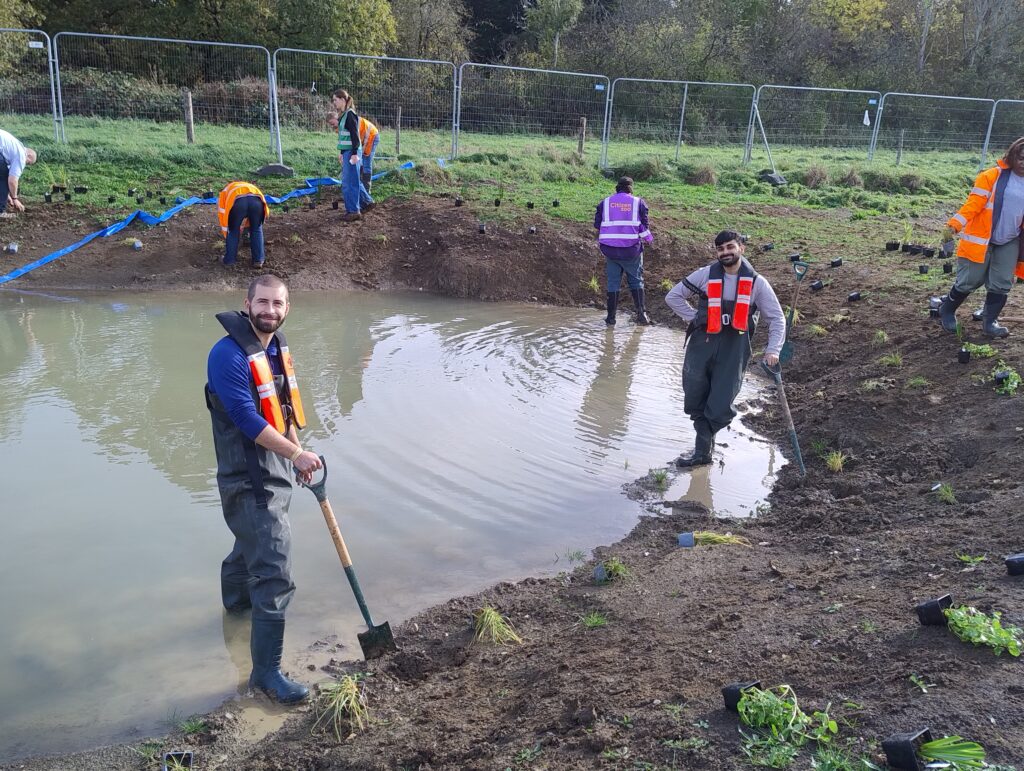
Last week, a team of seven JSM Group volunteers joined forces with Citizen Zoo and euNetworks to support the creation of a new wetland habitat at Tolworth Court Farm.

Together, we planted aquatic vegetation across the site’s artificial wetland, a key milestone in Citizen Zoo’s long-term rewilding vision. These plants will help boost biodiversity, support local wildlife, and contribute to a greener, more resilient urban ecosystem.

Ben Stockwell, Urban rewilding officer at Citizen Zoo says:

We were delighted to welcome a brilliant team from JSM and euNetworks to our Wild Tolworth site for a day of wetland planting. This marked a major milestone – the first plants to go into the ground since we created our 3,500m³ wetland. A huge thank you to JSM for providing the aquatic plants that will help bring this new habitat to life, and to everyone who took part for making it such a productive and inspiring day.

Vegetation plantation

We’re proud to play a part in this inspiring project and look forward to future opportunities to support nature-based solutions in our communities.

At JSM Group, we pride ourselves on delivering complex infrastructure projects while prioritising environmental stewardship.

Our recent 132kV cable crossing project – connecting to a National Grid substation – tested this commitment with unique challenges that required innovative solutions.

The challenge: Balancing infrastructure needs with environmental protection

The project required an open cut crossing of the main River Colne, which is an ecologically sensitive area and a location where two rivers meet. After extensive planning, we ruled out:

  • Bridge-mounted solutions– due to structural limitations identified by local authorities
  • Horizontal directional drilling (HDD)– engineering difficulties made this approach unfavourable

This left an open-cut river crossing as the preferred option – a method with higher environmental risks that demanded meticulous planning.

Ecological and environmental controls included

Ecological surveys including Phase 1 habitat surveys, water vole surveys and ground level assessments for bat roosts in trees were undertaken.

A check for otters was made prior to the start of works, with one trail camera in place for two weeks. Immediately prior to works, a further check of the banks and the island was made to ensure otters were not present in the area.

Site lighting was avoided overnight, as light can be detrimental to foraging and commuting bats which are highly likely to use the river.

Vegetation clearance (there was minimal required) was undertaken under ecological supervision.

Prior to dewatering, approximately 70 fish, including Bullheads and Perch, were moved safely over the dam.

Good practices regarding preventing pollution were always maintained, including:

  • Fueling vehicles and equipment away from the river
  • Ensuring machinery and equipment were well-maintained to minimise the chance of leaks
  • Having biosecurity measures in place throughout the works

The bigger picture

This 21-day operation – the culmination of 2 years of design, permitting, and stakeholder coordination – underscores how infrastructure development and environmental protection can coexist.

By documenting these lessons, we’re not just improving our processes but contributing to industry-wide best practices.

Joe Scanlon, Head of Civil Operations at JSM says;

Considering the increasing engineering challenges associated with cable routes in the UK, this achievement highlights JSM Group’s capability to overcome such difficulties and ensure projects are delivered safely and efficiently.

A big thank you goes out to all teams involved.

We’re delighted to announce that JSM Group Services Ltd won the Product Innovation: Services & Software award at the edie Awards 2025 for our NICE® (Non-Intrusive Cable Extraction) system.

The edie Awards recognise the best in UK corporate sustainability so to be recognised in such a way is a great honour.

The Judges said:

The Judges were impressed that in creating a way to safely extract such cables with far less environmental damage and disruption than traditional methods, NICE® makes sustainable development much more achievable.

Find out more about NICE.

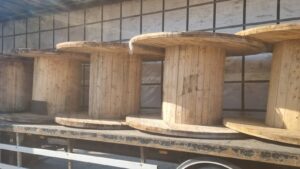
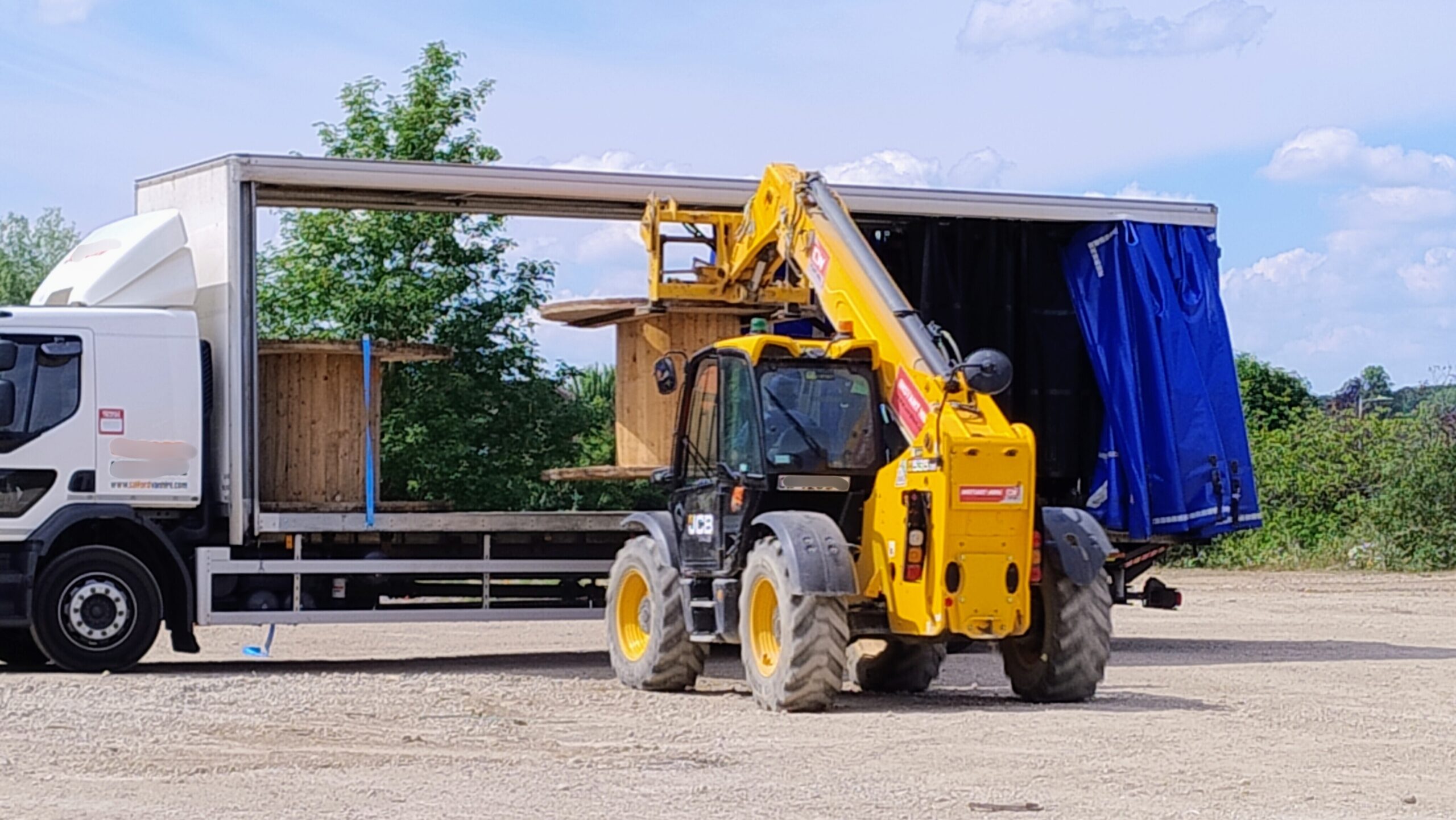
We are reusing 11 cable drums from one of our yards, ensuring valuable materials continue their lifecycle instead of becoming waste.

At JSM, sustainability isn’t just a goal, it’s a continuous journey embedded in our operations. A recent milestone exemplifies this commitment, where we successfully collected and reused 11 cable drums. This initiative directly contributes towards our ESG target of reuse of 30% of the wood we use in 2025, reinforcing responsible wood reuse and minimising environmental impact.

Following the Waste Hierarchy, waste prevention remains the optimal approach. However, when prevention isn’t possible, reuse stands as the next best option – offering environmental and economic benefits by extending the life cycle of materials. By repurposing cable drums, we actively reduce unnecessary waste and contribute to a more sustainable, circular economy.

Stephen Evans-Howe, SHEQ Director at JSM, emphasised the significance of this effort:

At JSM, we’re constantly seeking ways to minimise waste and enhance sustainability. The reuse of these cable drums demonstrates our proactive approach to resource efficiency and environmental responsibility. Sustainability is not just a corporate target, it’s a principle that drives our decisions every day.

Sustainability is a collective effort, and every action, big or small, counts. Through initiatives like this, we ensure that valuable resources aren’t discarded but repurposed for future use. By prioritising reuse, we continue to set industry standards and drive meaningful environmental change.

A huge thank you to our teams for their dedication in making this possible. Let’s keep pushing forward toward a greener future!

We’re privileged to announce that our NICE (Non-Intrusive Cable Extraction) system won the Equipment Innovation category at the Ground Engineering Awards 2025.

Held on 18 June 2025 in London, the Ground Engineering Awards celebrate innovation and excellence across the geotechnical sector. Over 900 industry professionals came together for an evening of recognition, networking and inspiration, spotlighting the outstanding companies, projects and individuals driving the future of ground engineering.

John Fitzgerald, Senior Operations Manager, JSM, said:

The quality of entries from all shortlisted demonstrated the industry’s commitment to innovation, a commitment JSM are excited to carry on as we strive for continued excellence in client delivery.

Find out more about NICE

JSM has taken a leading role in safeguarding ecological integrity during the development of a project site in High Wycombe. Responsible for managing environmental aspects, we executed a comprehensive programme of reptile translocation and nesting bird protection, aiming to minimise disruption and restore the site post-construction, while upholding the highest standards of safety and compliance.

To support reptile translocation, JSM identified a sunny meadow just beyond the southern boundary as a suitable receptor site. We built hibernacula, installed fencing, and created secure access for slow worm movement. Over 80 slow worms were relocated between March and July 2025 under ecological supervision and Ramboll’s guidance. Due to unexpectedly high numbers, the clear-check period was extended from 11 to 30 days to ensure thorough and humane relocation.

Simultaneously, strict protocols were followed to protect nesting birds during vegetation clearance. Daily ecological checks were conducted, and if active nests were found, a 5-metre exclusion zone was enforced until chicks fledged, ensuring compliance with the Wildlife and Countryside Act 1981.

Vegetation clearance was done using phased strimming under supervision, allowing careful placement of reptile mats and minimising habitat disturbance. Reptile fencing is inspected bi-weekly and maintained throughout the project.

Claire Parsons, Environmental Manager at JSM says:

The reptile mitigation work has been an opportunity for the JSM Environment Team to gain hands-on experience alongside our passionate ecological subcontractors, Plan Ecology and Vertecol, who have worked tirelessly to ensure no slow worm is left behind and that we remain fully compliant with ecological legislation. The steep slopes around the Molins substation build sites required abseiling ecologists (Vertecol) to install fencing, conduct mat checks, and carry out translocations and searches, all from secured ropes. Brilliant effort all round to keep these legless lizards safe.

JSM’s approach reflects a strong commitment to balancing development with conservation. By embedding ecological considerations into every stage, we’re protecting wildlife and setting a high standard for sustainable construction.

The electrical supply will run from Belvedere and terminate at the Littlebrook substation in Dartford.

This project will be one of the largest and most efficient Energy from Waster (EfW) facilities in the UK, employing 140 personnel from the area, processing 650,000 tonnes of non-recyclable waste and generating enough electricity to power 176,000 homes each year. The facility will utilise well-established moving grate technology. This technology has been successfully deployed across numerous operational EfW facilities in the UK.

Over 3 million tonnes of London’s waste must either be landfilled or sent overseas, and this project will provide vital capacity to help address this. It will also help to achieve the goals set out in the London Plan which aim for 100% of London’s waste to be processed within its boundaries by 2026.

We apologies for the disruption this has caused and are working hard with key stakeholders including London Borough of Bexley to ensure minimum disruption to the public. We are working extended hours 7 days a week to ensure they are completed as soon as possible and will be providing a live website that shows the works programme and the live closures.

As the works progress, we will provide weekly updates via the website to assess suitable changes showing where the works are and changes to the traffic network.